A Guide to High-Performance Coating Generic Types and Benefits
A Guide to High-Performance Coating Generic Types and Benefits
When people talk about types of coatings, they’re usually referring to the resin (or binder) that determines how a coating cures, protects, and ultimately performs in service. In the coatings industry, this chemistry is known as the coating’s generic type — the foundational technology that defines its performance characteristics.
Coatings are formulated to perform specific tasks in specific environments. They may be designed to protect steel from corrosion, shield concrete from chemical attack, resist abrasion and impact, withstand UV exposure and weathering, provide waterproofing or moisture vapor resistance, or even help control condensation and reduce thermal conductivity. Because of this wide range of demands, high-performance coatings must be carefully matched to both the substrate — such as steel, concrete, masonry, or aluminum — and the environmental conditions they will face, whether that’s immersion service, exterior exposure, chemical splash, marine atmospheres, or high heat.
Each generic type brings its own unique strengths and characteristics, which is why understanding these chemistries is essential when selecting a coating system. The right choice can make the difference between a coating system that simply covers a surface and one that truly protects it for the long term. Simultaneously, a single coating is only as good as the entire high-performance system in which is used.
Below is a practical overview of some of the most common coating generic types used in industrial and infrastructure applications, and what makes each unique.
Common Coating Generic Types
Epoxy
What it is: A two-component, chemically curing coating known for strong adhesion and chemical resistance.
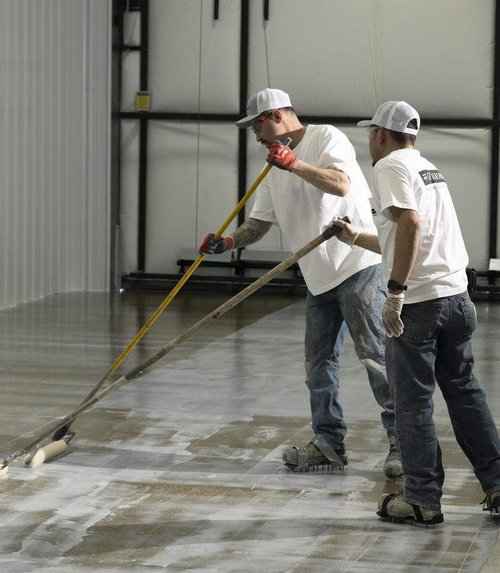
Epoxies are thermosetting polymers created by reacting epoxy resins with curing agents, forming highly durable coatings with strong adhesion, chemical resistance, and toughness. There are many different types of epoxy technologies — including polyamine, polyamide, phenalkamine, phenolic, and novolac systems — each designed to deliver specific performance characteristics depending on the environment and service conditions. Epoxies commonly serve as primers, intermediates, or linings in corrosion control systems. While they perform well in immersion and chemical exposure, epoxies will chalk, yellow, and fade when exposed to UV light unless protected by a topcoat.
Ideal for:
- Resinous flooring
- Primer or intermediate (barrier) coat for steel or concrete
- Chemical or potable water immersion
Unique strengths:
- Excellent adhesion to steel and concrete
- Strong chemical and abrasion resistance
- High-build capabilities
- Barrier protection
Epoxies are often considered the workhorse of protective coatings.
Aliphatic Polyurethane
What it is: A durable, UV-resistant coating commonly applied over epoxy primers, serving as both an intermediate and/or topcoat.
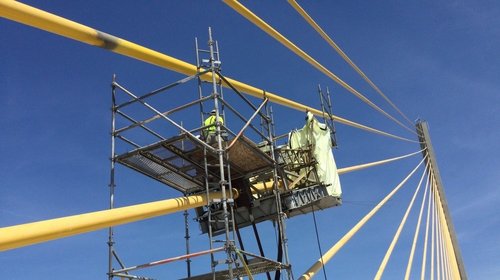
Polyurethanes are formed by reacting polyols with isocyanates. In industrial coatings, they are often used as topcoats because of their durability, flexibility, and UV resistance. Aliphatic polyurethane formulations provide strong color and gloss retention in exterior environments, making them common on structural steel, tanks, and exposed industrial equipment.
Ideal for:
- Exterior steel structures
- Bridges
- Tanks
- High-visibility architectural projects
Unique strengths:
- Excellent color and gloss retention
- Strong UV resistance
- Good flexibility
Aliphatic Polyurethanes are often selected when aesthetics and long-term weatherability matter.
Acrylic
What it is: A versatile coating technology that is usually available in single-component, water-based formulations.
Acrylic coatings are built around acrylic resins and are known for color retention and resistance to ultraviolet degradation. They are commonly used as topcoats where long-term appearance matters, but can also be formulated as primers for various substrates. Acrylics are often selected for atmospheric exposure, light industrial environments, and architectural metal.
Ideal for:
- Architectural applications
- Masonry surfaces
- Light industrial use
Unique strengths:
- Good color retention
- Ease of application and cleanup
- Fast dry times
Acrylics are often used where ease of use, moderate performance, and cost-effectiveness are priorities.
Vinyl Ester
What it is: A high-performance resin system designed for extreme chemical environments.
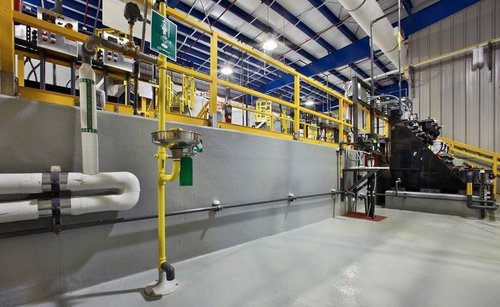
Vinyl Esters are high-performance resin systems engineered to perform in some of the most demanding chemical environments. They are commonly specified for applications such as wastewater digesters, chemical processing, and other aggressive immersion conditions where traditional epoxies may fall short. Vinyl esters offer exceptional chemical resistance, superior heat tolerance, and excellent durability to acids and solvents, making them a go-to solution when long-term protection against harsh chemicals is critical.
Ideal for:
- Thermophilic Wastewater Digesters
- Acid Secondary Containment
- Aggressive immersion environments
Unique strengths:
- Exceptional chemical resistance
- High temperature tolerance
- Superior resistance to acids and solvents
Vinyl esters are often specified where traditional epoxies may not withstand aggressive chemical attack.
Polyaspartic
What it is: A fast-curing technology made by reacting an aliphatic polyisocyanate with a polyaspartic ester.
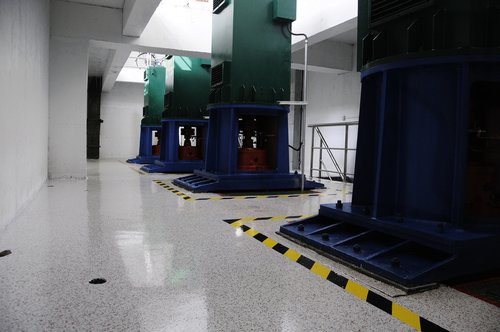
Polyaspartic coatings are known for having similar attributes to two-component aliphatic polyurethanes, but with a faster cure and very low VOC. They can be formulated to have very high film builds, making them popular for resinous flooring, and can also be used in direct-to-metal (DTM) and steel applications due to their exceptional color, cure speed, and gloss retention.
Ideal for:
- Commercial flooring
- Fast-track projects
- Cold-weather applications
- Original Equipment Manufacturer (OEM) applications
Unique strengths:
- Rapid cure times
- UV stability
- Can be applied in a wide temperature range
Polyaspartics are often selected when downtime must be minimized and cure speed must be maximized.
Alkyd
What it is: A traditional, oil-based coating.
Alkyds are oil-modified polyester resins that cure through oxidation when exposed to air. They have been used for decades in both industrial and maintenance settings. Alkyds are easy to apply and provide good initial adhesion, but they are generally not suited for aggressive chemical or high-corrosion environments.
Ideal for:
- Maintenance painting
- Light industrial environments
Unique strengths:
- Ease of application
- Good flow and leveling
- Cost-effective
While not typically used for severe industrial exposure, alkyds remain useful in less demanding environments.
Zinc-Rich Primer
What it is: A primer containing high concentrations of zinc dust that provides cathodic protection to steel.
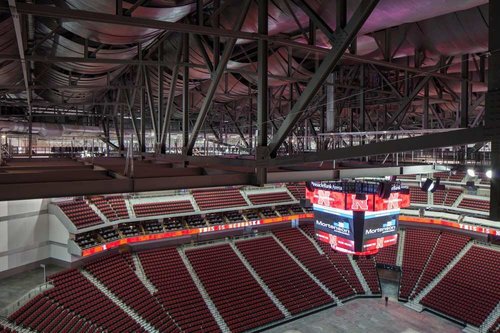
Zinc-rich coatings contain high levels of zinc dust in either organic or inorganic binders. When applied to steel, they provide cathodic protection by allowing the zinc to corrode preferentially to the steel substrate. These coatings are widely used as primers in corrosion protection systems for bridges, tanks, and structural steel.
Ideal for:
- Structural steel
- Bridges
- Water and industrial tanks
- Marine environments
Unique strengths:
- Outstanding galvanic corrosion protection
- Extends steel service life
- Exceptional undercutting resistance
Zinc-rich primers actively protect steel via galvanic action.
Coal Tar
What it is: A heavy-duty coating traditionally used for immersion and buried service.
Coal tar coatings, often blending a coal tar pitch base with epoxy resins, create thick moisture-resistant films. Historically, they were widely used in wastewater, marine, and buried service environments because of their strong resistance to water and certain chemicals. Newer technologies have largely replaced their wide use, but they are still utilized where basic protection is needed.
Ideal for:
- Non-severe wastewater structures
- Buried pipelines
- Below-grade structures
Unique strengths:
- Excellent moisture resistance
- Strong barrier protection
Due to environmental and regulatory considerations, coal tar use has declined in favor of newer technologies, but its performance legacy remains notable.
Fluoropolymer
What it is: An advanced resin system engineered for exceptional weatherability.

Fluoropolymer coatings contain resins that provide exceptional resistance to UV exposure, chemicals, and staining. These coatings are often specified and used as topcoats where long-term color stability and environmental resistance are required, particularly in architectural metal and specialty industrial applications.
Ideal for:
- Architectural facades
- Stadiums
- Landmark structures
- Water storage tank exteriors
Unique strengths:
- Superior UV resistance
- Long-term color retention
- Excellent dirt resistance
Fluoropolymers are often chosen for projects where long-term aesthetics are critical.
Insulative Coatings
What they are: Coatings formulated with insulating materials to reduce heat transfer and control condensation.
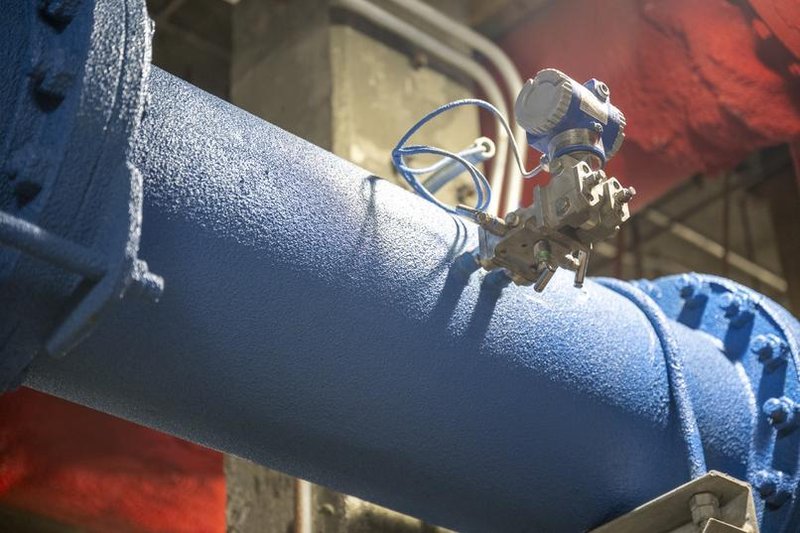
Insulation coatings are specially formulated with insulating materials to reduce heat transfer and manage condensation on surfaces. They’re ideal for tank exteriors, marine vessels, and industrial facilities where temperature and moisture control are critical. These thermal insulating coatings enhance thermal efficiency, help prevent condensation, and improve overall energy performance, all while protecting substrates from moisture-induced corrosion.
Ideal for:
- Tank exteriors
- Marine vessels
- Industrial facilities
Unique strengths:
- Thermal efficiency
- Condensation control
- Personnel protection
- Improved energy performance
These systems can reduce energy loss and protect substrates from moisture-related corrosion.
Polysiloxanes
What they are: A class of coatings that blend a silicone-oxygen backbone with different resins such as epoxy or polyurethane.
Polysiloxane coatings combine organic resin systems with siloxane chemistry. Known for their weatherability, these coatings are especially effective at resisting mold growth and dirt pickup, helping surfaces stay cleaner longer. In many applications, polysiloxanes serve as high-durability topcoats in bridge, marine, and heavy industrial environments.
Ideal for:
- Bridges and infrastructure
- Marine and industrial environments
- Architectural facades
- OEM shop or field applications
Unique strengths:
- Exceptional color and gloss retention
- Excellent weathering resistance
- Low-VOC, isocyanate-free formulation
- High-build application
- Direct-to-Metal (DTM)
These systems protect structures where high-build applications for exterior exposures are encountered.
Repair Mortars
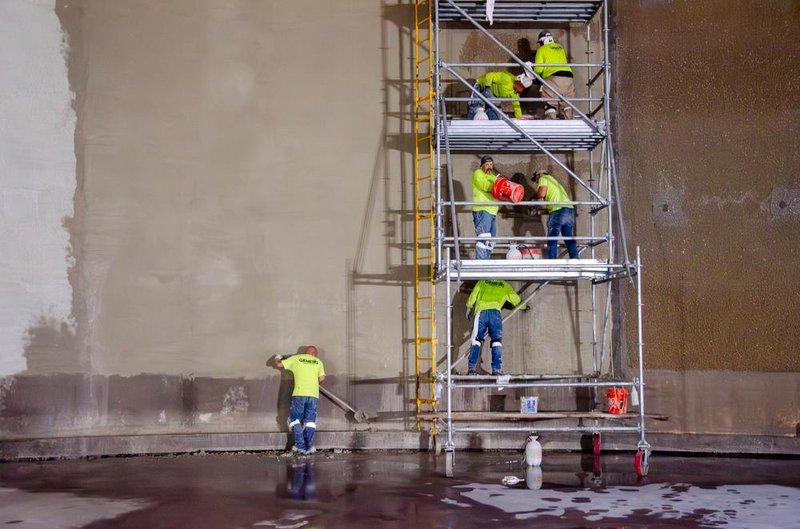
What they are: Cementitious or resinous materials used to restore damaged concrete prior to coating application. Available in both cementitious formulations and epoxy resin-based blends, these materials can be used in virtually any environment where high-performance coatings are applied to concrete, helping restore substrate integrity and provide a sound surface for long-term coating performance.
Ideal for:
- Spalled concrete
- Structural rehabilitation
- Floor resurfacing
Unique strengths:
- Rebuilds deteriorated substrates
- Provides structural reinforcement
- Creates a proper profile for coating systems
A coating system is only as good as the surface beneath it — mortar systems ensure a sound foundation.
Chemistry Drives Performance
Selecting the right coating is not about choosing a color — it’s about choosing a chemistry.
Each generic type offers unique performance characteristics that align with specific substrates, exposures, and operational demands. When coatings are properly matched to the environment, they:
- Extend asset life
- Reduce maintenance costs
- Improve safety and compliance
- Deliver long-term return on investment
Understanding generic types is the first step toward specifying coating systems that truly perform. No single chemistry solves every challenge, which is why many high-performance systems combine multiple technologies to deliver the best overall results. A common example is a zinc-rich primer paired with an epoxy intermediate and a UV-resistant topcoat — each layer contributing a specific function to balance corrosion protection, durability, and long-term performance. By understanding how these chemistries work together, specifiers can build systems designed to meet the real demands of the environments they protect.
E-News
Coating News Direct to Your Inbox
Stay informed about industry news and innovative coating products via email.
Contact Your Rep
Looking for Some Local Coatings Guidance?
Reach out to one of our knowledgeable and reliable representatives near you.
TnemecU
Want to Earn Some CEUs?
Check out all of Tnemec's coating courses, available on demand and in person.